The Long, Slow Road
When rehabilitators finally returned her call, Ginnie realized that there was no full-time wildlife facility on Eastern Long Island. The closest, “Volunteers for Wildlife” was in Huntington at the time. The few local rehabilitators had to work full time jobs. Some area veterinarians would treat wildlife, but only after their dog or cat rounds were completed.
There had to be another way! Ginnie began to research and accumulate every bit of available information on wildlife rehabilitation. She attended seminars in various states across the country. She offered to volunteer. Slowly she was gaining the necessary knowledge to try on her own. In 1995, Ginnie passed the rehabilitator’s test given by the NY State Department of Environmental Conservation. Because she was working in Yaphank, Ginnie petitioned Dr. Tepper of Shirley Animal Hospital as her co-operating veterinarian.
Dr. Tepper agreed and so began the odyssey of transporting cages with sick and injured animals from Noyak to Yaphank to Shirley. Crates has to be carried through parking lots, though hallways, down stairways to the archive room of the Public Works Building where she tended to her patients during her lunch and coffee breaks. Evenings the entire process had to be reversed. Evenings and weekends, Ginnie’s house was transformed into a clinic for the wild patients.
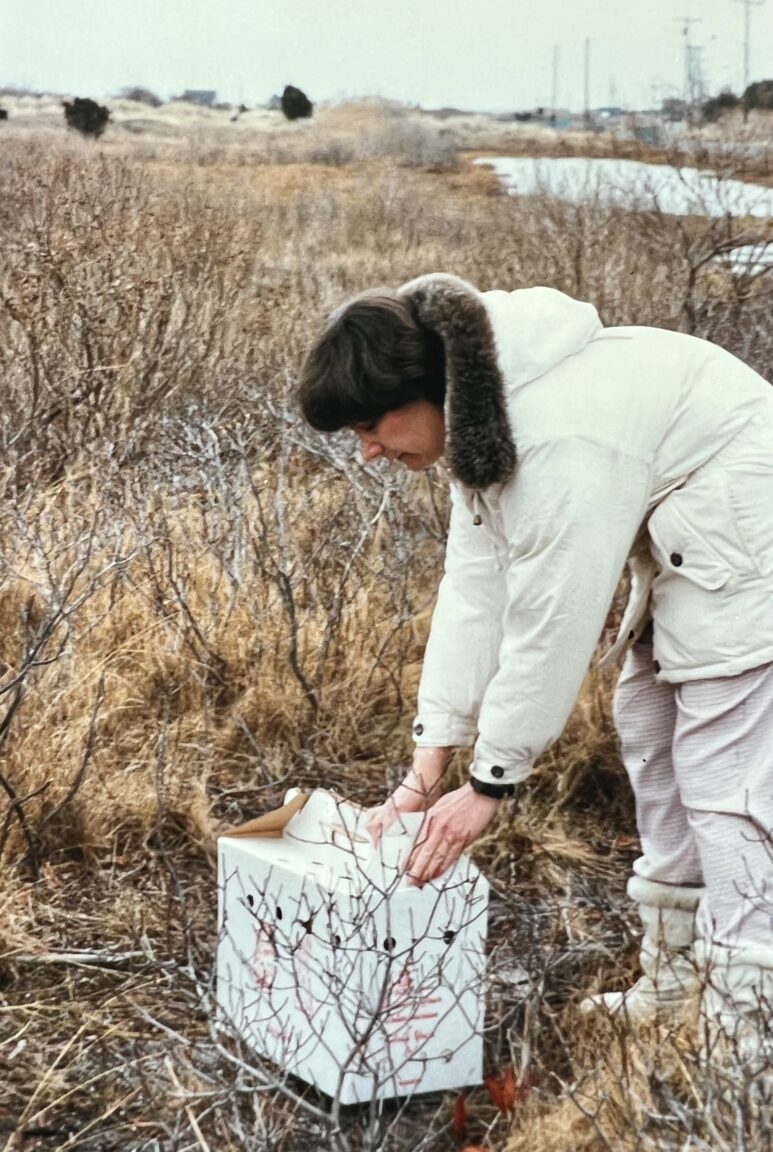
It was not unusual to find a goose or loon swimming in the bathtub or swans sailing in her swimming pool. Baby squirrels peered out of incubators in the hallways. Birds with splinted wings were kept in boxes full of air holes. Turtles resided in terrariums in the warmest spot in the house. All available space was taken. This was not the answer!
Considering the number of animals injured in our area, a home-based rehabilitation center was only a stop-gap measure! Depositing the injured animal with a local vet is also not a viable answer, because the wild creature is subjected to the sounds and smells of domestic animals. A place had to be created where injured animals would receive immediate attention under supervised conditions!
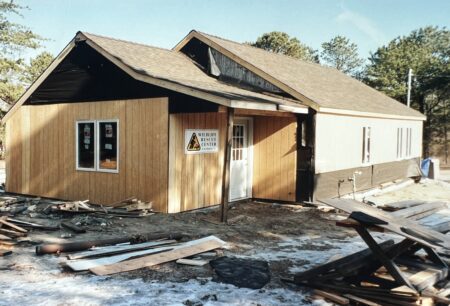
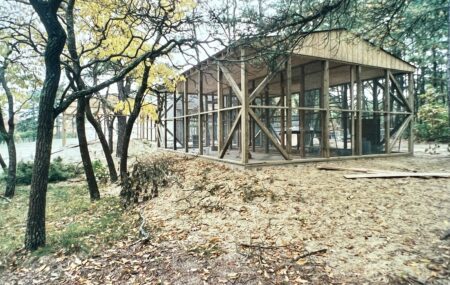
As local zoning laws do not include construction of buildings for the purpose of housing wildlife, the only viable alternative appeared to be acquisition of public land through a lease agreement. This task could only be accomplished by a non-profit corporation with an active Board of Directors.